Board of Directors & International Advisory Board

MD, MA, MPH, PGDip, EDAIC, EDRA

MD

MD


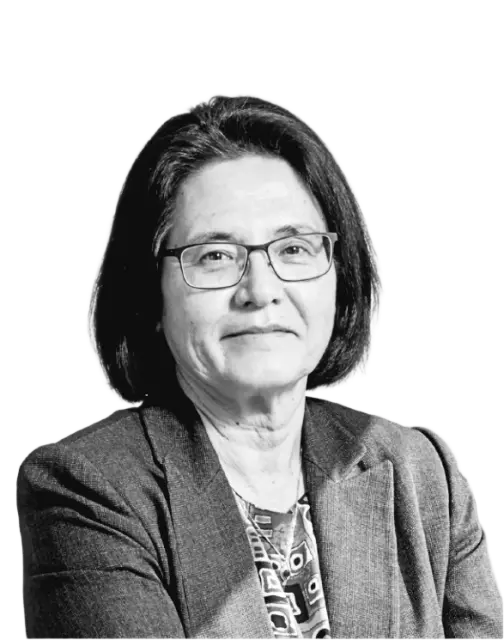





Member of The Board
Dr Omar Tujjar
Founder & President
MD, MA, MPH, PGDip, EDAIC, EDRA
- Consultant in Anaesthesia and Intensive Care Medicine, National Orthopaedic Hospital Cappagh, Dublin
- President and Founder, International Society of Medical AI
Dr. Omar Tujjar is a consultant anaesthetist and intensivist practising in Dublin. He trained in anaesthesia, intensive care, and pain medicine across Italy, France, Belgium, and Ireland, and holds qualifications in leadership, clinical governance, public health, and medical education. He has held senior clinical and managerial positions within the Irish health system, including ICU leadership, pandemic surge planning, and institutional quality and safety committees. His academic work spans perioperative safety, critical care, and health systems research.
Dr. Tujjar is the founder and President of the International Society of Medical AI (ISMAI), a clinician-led, non-profit organisation focused on the evidence-based, ethically grounded use of artificial intelligence in medicine. He leads the Society’s strategic direction, governance, and engagement with regulators, academic institutions, and international stakeholders. His work in this capacity addresses the integration of AI into clinical workflows, the development of governance frameworks for medical AI, and the advancement of interdisciplinary collaboration between clinicians, technologists, ethicists, and policymakers.
Member of The Board
Prof Fabio Massimo Abenavoli
Director
MD
- President, Emergenza Sorrisi NGO (Emergency Smiles)
- Plastic and Reconstructive Surgeon
- Maxillofacial Surgeon and Otolaryngologist
Professor Fabio Massimo Abenavoli is an Italian surgeon with longstanding involvement in humanitarian reconstructive care. He trained in medicine and surgery in Rome and holds specialist qualifications in plastic and reconstructive surgery, maxillofacial surgery, and otolaryngology. In 2007, he founded Emergenza Sorrisi NGO (Emergency Smiles), a non-profit organisation dedicated to providing reconstructive surgical care to children and young adults affected by congenital malformations, severe burns, trauma, and war-related injuries.
Through coordinated international missions, the organisation delivers complex surgical interventions in regions with limited access to specialised care, while supporting local healthcare systems through structured training and capacity-building programmes. Under his leadership, Emergenza Sorrisi has treated thousands of patients across multiple countries, establishing sustained surgical partnerships in settings where specialist provision is otherwise absent. Professor Abenavoli’s work sits at the intersection of surgical practice, international development, and medical ethics, addressing the practical demands of delivering safe, technically complex care in resource-constrained environments.
Member of The Board
Dr Andrea Alfonso
Director
MD
- Consultant Anaesthesiologist, Cambridge University Hospitals NHS Foundation Trust
- Specialist in Obstetric and Regional Anaesthesia
Dr Andrea Alfonso is a consultant anaesthesiologist at Cambridge University Hospitals NHS Foundation Trust. His clinical career spans leading academic and tertiary centres in Italy, the United Kingdom, Ireland, and Germany, with a practice focused on obstetric and regional anaesthesia and a broader interest in perioperative medicine. He has contributed to the design and implementation of enhanced recovery pathways, patient blood management programmes, and opioid-sparing analgesic strategies, and has held governance and quality improvement roles in several institutions.
His research interests include haemodynamic monitoring, simulation-based education, and evidence-informed anaesthesia protocols. He has a sustained interest in medical education and has delivered training in anaesthesia and perioperative care across multiple healthcare systems. Within ISMAI, he contributes clinical and educational expertise to the Society’s work on the responsible integration of artificial intelligence into anaesthesia and perioperative medicine, with particular attention to the translation of evidence-based practice into technology-assisted clinical decision-making.
Member
Prof Edward H. Shortliffe
MD, PhD, MACP, FACMI, FIAHSI
- Chair Emeritus and Adjunct Professor, Department of Biomedical Informatics, Vagelos College of Physicians and Surgeons, Columbia University
- Adjunct Professor of Population Health Sciences, Weill Cornell Medical College
- Former President and Chief Executive Officer, American Medical Informatics Association
Professor Edward H. Shortliffe is a physician and computer scientist whose work helped establish biomedical informatics and artificial intelligence in medicine as academic disciplines. His early research at Stanford University produced MYCIN, one of the first expert systems in clinical medicine, which laid foundational principles for clinical decision-support systems and knowledge-based AI in healthcare. His subsequent scholarship has addressed the design, evaluation, and implementation of intelligent systems in clinical practice, and the policy and educational infrastructure needed to support them.
He has held senior academic leadership positions at Stanford University, Columbia University, and Arizona State University, and served as Chair of Biomedical Informatics at Columbia and as President and Chief Executive Officer of the American Medical Informatics Association. His contributions span research, education, policy, and professional governance, with particular influence on informatics training programmes, clinical informatics certification, and national and international health information policy. Professor Shortliffe is a member of the U.S. National Academy of Medicine.
Member
Prof Vimla L. Patel
PhD, DSc, FRSC, FACMI, FIAHSI
- Adjunct Professor of Biomedical Informatics, Vagelos College of Physicians and Surgeons, Columbia University. Adjunct Professor of Population Health Sciences, Weill Cornell Medical College.
- Former Senior Research Scientist and Director, Center for Cognitive Studies in Medicine and Public Health, New York Academy of Medicine
Professor Vimla L. Patel is a cognitive scientist whose research has shaped the foundations of cognitive science in medicine, medical education, and biomedical informatics. Trained as an educational and cognitive psychologist, her early work established core findings on clinical reasoning, decision-making, and expertise in health professions education. Over subsequent decades, her scholarship has expanded to integrate cognition, informatics, and artificial intelligence, with a particular focus on human decision-making in complex clinical and public health environments.
She has held senior academic and research appointments at leading institutions in North America and has served as Principal Investigator on multiple major NIH-funded programmes examining cognitive processes, error, workflow, and decision support in healthcare. Her research has been particularly influential in demonstrating how cognitive factors shape the adoption and effectiveness of clinical information systems. She is a Fellow of the Royal Society of Canada, the American College of Medical Informatics, and the International Academy of Health Sciences Informatics. Professor Patel has authored more than four hundred peer-reviewed publications and edited several foundational volumes in the field.
Member
Prof Lucila Ohno-Machado
MD, MBA, PhD, FACMI, FIAHSI
- Waldemar von Zedtwitz Professor of Medicine and Biomedical Informatics and Data Science, Yale School of Medicine.
- Deputy Dean for Biomedical Informatics, Yale School of Medicine.
- Chair, Department of Biomedical Informatics and Data Science, Yale School of Medicine
Professor Lucila Ohno-Machado is a physician and biomedical informatician who serves as Deputy Dean for Biomedical Informatics and Chair of the Department of Biomedical Informatics and Data Science at Yale School of Medicine, where she holds the Waldemar von Zedtwitz Professorship. She received her medical degree from the University of São Paulo, her MBA from Fundação Getúlio Vargas, and her PhD in medical information sciences and computer science from Stanford University. Prior to Yale, she was founding chair of the Department of Biomedical Informatics at the University of California San Diego and held appointments at Harvard Medical School and MIT.
Her research addresses predictive models and privacy-preserving data sharing, including the development of federated learning methods for building multivariate models across institutions without centralising patient data. She organised the first large-scale clinical data-sharing initiative across the University of California medical systems and has served as Principal Investigator on numerous major NIH-funded programmes in biomedical informatics. She is an elected member of the National Academy of Medicine, the American College of Medical Informatics, and the International Academy of Health Sciences Informatics, and is a past Editor-in-Chief of the Journal of the American Medical Informatics Association.
Member
Prof Yu-Chuan (Jack) Li
MD, PhD, FACMI, FIAHSI
- Distinguished Professor, Graduate Institute of Biomedical Informatics, Taipei Medical University.
- Editor-in-Chief, BMJ Health and Care Informatics.
- Immediate Past President, International Medical Informatics Association (IMIA)
Professor Yu-Chuan (Jack) Li is a physician and biomedical informatician whose research addresses the application of artificial intelligence to medication safety, disease prediction, and clinical decision support. He received his medical degree from Taipei Medical University and his PhD in medical informatics from the University of Utah. At Taipei Medical University, he was founding Dean of the College of Medical Science and Technology and founded the International Center for Health Information Technology, establishing institutional infrastructure for translational informatics research across the university’s affiliated hospitals and research centres.
His principal research programme, built on analysis of large-scale national health insurance data, has produced probabilistic models for the detection of medication errors and temporal phenomic models for the prediction of disease onset. He continues to practise as a dermatologist at Taipei Municipal Wanfang Hospital and serves as Editor-in-Chief of BMJ Health and Care Informatics. He served as President of the International Medical Informatics Association from 2022 to 2025, and is a Fellow of the American College of Medical Informatics, the International Academy of Health Sciences Informatics, and the Australasian College of Health Informatics.
Member
Prof Dr Ulli Prokosch
PhD
- Chair of Medical Informatics, Friedrich-Alexander-Universität Erlangen-Nürnberg, Germany.
- Chief Information Officer, University Hospital Erlangen (emeritus senior leadership)
Professor Ulli Prokosch holds the Chair of Medical Informatics at Friedrich-Alexander-Universität Erlangen-Nürnberg, where his research addresses health information systems integration, interoperable electronic health records, and data-driven clinical and translational research across academic and hospital settings. He has also served as Chief Information Officer at University Hospital Erlangen, where he was responsible for aligning clinical workflows, institutional IT strategy, and research infrastructure.
He has been closely involved in German and international medical informatics initiatives, particularly in large-scale data integration programmes and professional society governance. His research programme addresses data governance, interoperability standards, and the application of digital and AI technologies within complex health systems. He has contributed to national infrastructure projects aimed at enabling secondary use of clinical data for research, and his work informs the design of institutional and cross-institutional architectures for data sharing in academic medicine.
Member
Prof Dr Barbara Prainsack
PhD
- Professor of Comparative Policy Analysis, University of Vienna.
- Chair, European Group on Ethics in Science and New Technologies (EGE)
Professor Barbara Prainsack is a political scientist whose work addresses the ethical, social, and policy dimensions of science, medicine, and data-driven technologies. As Professor of Comparative Policy Analysis at the University of Vienna, she examines how governance frameworks and institutional arrangements shape the development and use of biomedical innovation, with a focus on solidarity, equity, and democratic accountability in health systems.
She serves as Chair of the European Group on Ethics in Science and New Technologies (EGE), the independent advisory body to the European Commission on ethical questions arising from advances in science and technology. In this capacity, she leads deliberations on the implications of emerging technologies, including artificial intelligence and digital health, at the intersection of innovation, fundamental rights, and public interest. Her published work on solidarity, data governance, and the politics of personalised medicine has been widely cited in both academic and policy settings, and she has advised governments and international bodies on the regulation of genomic and health data.
Member
Prof Muhammad Mamdani
PharmD, MA, MPH
- Professor, University of Toronto (Faculty of Medicine, Dalla Lana School of Public Health, and Leslie Dan Faculty of Pharmacy).
- Director, Temerty Centre for Artificial Intelligence Research and Education in Medicine (T-CAIREM).
- Vice President, Data Science and Advanced Analytics, Unity Health Toronto
Dr Muhammad Mamdani is a health services researcher and data scientist whose work addresses the use of advanced analytics and artificial intelligence to improve clinical care, health system performance, and public policy. Trained in pharmacy, economics, and public health, he has led the development of large-scale analytics platforms grounded in real-world clinical data at major academic health centres. He is the founding Director of the Temerty Centre for Artificial Intelligence Research and Education in Medicine (T-CAIREM) at the University of Toronto, overseeing interdisciplinary programmes in AI research, clinical implementation, and education.
He also serves as Vice President for Data Science and Advanced Analytics at Unity Health Toronto, where he leads institutional efforts to embed machine learning and predictive modelling within clinical operations. Dr Mamdani has authored an extensive body of peer-reviewed research in pharmacoepidemiology, outcomes research, and applied machine learning, and has advised governments and health authorities on evidence-informed policy. His work is characterised by a sustained focus on the translation of analytical methods into operational tools that demonstrably affect patient outcomes and health system efficiency.
Member
Prof Stefan Lorenz Sorgner
BA, MA, D.Phil
- Professor of Philosophy, John Cabot University, Rome
- Director and Co-Founder, Beyond Humanism Network
Professor Stefan Lorenz Sorgner is a philosopher whose work addresses the ethical, cultural, and philosophical implications of emerging technologies, with particular attention to transhumanism, posthumanism, and conceptions of human dignity in technologically mediated societies. He studied philosophy at King’s College London (BA), the University of Durham (MA), and the Friedrich Schiller University Jena (Dr. phil., supervised by Wolfgang Welsch and Gianni Vattimo). He teaches philosophy at John Cabot University in Rome, where he has served as Chair of the Department of History and Humanities, and is Director and Co-Founder of the Beyond Humanism Network.
He is the author of more than ten monographs, published by presses including Penn State University Press, Bristol University Press, Schwabe, and Marquette University Press. His scholarship on the relationship between Nietzsche’s concept of the Übermensch and transhumanist thought has generated sustained international debate, with dedicated symposia, edited volumes, and critical responses from scholars including Nick Bostrom and Max More. He is Founding Editor-in-Chief of the Journal of Posthuman Studies, published by Penn State University Press, and holds research fellowships at the Institute for Ethics and Emerging Technologies and the Ewha Institute for the Humanities in Seoul.